22
2nd QUARTER 2014
BUSINESS & MONEY
MATTERS OF INTEREST TO THE CFOS WE’RE
TALKING WITH DAILY
M
ore and more companies are
setting up “anti-workaholic”
policies to preserve worker health
and — yes — reduce costs. A
growing mountain of research
shows that those who work
50-plus hours per week have
almost a 70 percent higher risk of
developing heart disease and are
three times more likely to abuse
alcohol. This translates to higher
health care costs and millions lost
in decreased worker productivity.
(Stress reduces productivity by
50 percent.) To encourage a
productive 40-hour workweek,
some employers are teaching
workers time-management
strategies, limiting meetings, and
are encouraging contact with
clients that does not include
constant travel. It seems that rest
= revenue: A number of compa-
nies that instituted and enforce a
40-hour workweek have reported
double-digit revenue increases.
Source: Fortune 100 List and
Harvard Business Review
WOMEN MEN
100
0
89
11
83
17
1980
2001
2011
Building a
Better Board
Recent reforms have made
corporate boards better at
protecting shareholders and
preventing fraud. However, these
changes do little to advance
actual board performance.
According to research published
in the
Harvard Business Review
, successful boards adopt these four
best practices:
• Board members are informed about the businesses they are guiding
• There is a diversity of members from various types of companies
• Discussions are substantive and goal-oriented
• A good relationship is fostered between the lead director
and the CEO
Getting board composition right can be one of the most important steps a
company takes to ensure long-term growth and success.
Snapshot: Diversity Among
Fortune 100 Senior Executives
Put Down that Smartphone
China’s economy has grown
at an unprecedented rate for
the past decade. However, the
country’s growth and stability
are being threatened by a toxic
combination of political corruption
and mounting debt. While the rest
of the world faced a global slump,
China’s economy continued to
hum along — but stress fractures
are showing. Local government
debt has nearly doubled in the
past decade, exceeding $3 trillion.
China’s total debt level last
year was in excess of 200 percent
of its GDP. In a nation that
mass-produces, but does not
innovate, these numbers cannot
be sustained into perpetuity.
Beijing is slow to adjust policies
that will reduce economic
imbalances fueled by cheap credit
and government spending.
It remains to be seen if the
Chinese economy can continue
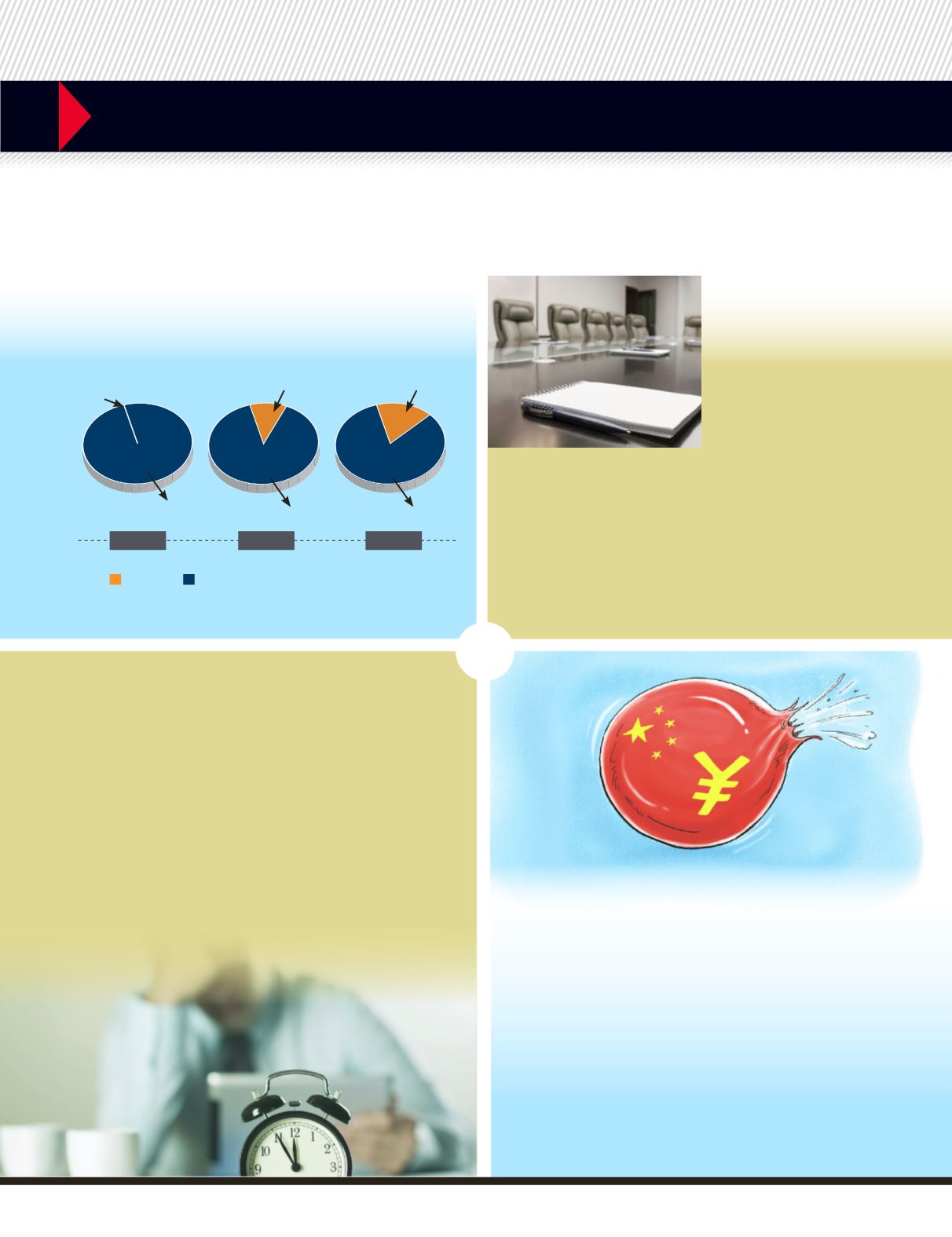
to grow into the world’s largest,
or will become the bubble burst
heard ’round the world.
Is China’s
Bubble About
to Burst?


